Substance Misuse Self Help
Self help guide for Substance Misuse, using effective CBT strategies. Make sense of the problem, then learn how to make positive changes
"Substances" includes any substance that an individual wants to reduce to stop using, so this may include nicotine, or caffeine, for instance, in addition to alcohol or drugs.
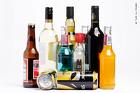

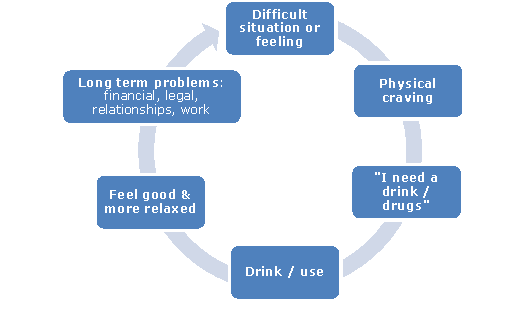
Misusing substances, perhaps alcohol or drugs, often starts as a way of coping with difficult situations or feelings, and finding that the substance helps you feel better, more relaxed. Every time a similar situation comes up, you know it helps, so you get into the habit...
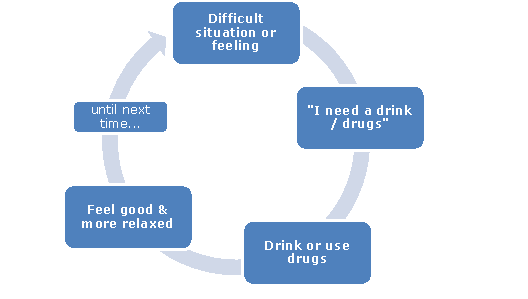
After a while though, as you start to rely more and more on alcohol or drugs to help you feel better, other problems seem to emerge as a result. Things like problems in your relationships. not being able to keep up with work or study, getting into trouble with the police, getting into real financial problems.
You might start to feel more depressed, anxious or angry and frustrated. All these things get worse as you continue to drink or use drugs, and so you drink and use more drugs in order to help you feel better, which results in making the problems worse. A real vicious cycle:
IMPORTANT - BEWARE!
You must seek help before stopping or cutting down suddenly on drinking o r using drugs - you must obtain the advice of an appropriate professional. This might be your GP in the first instance. It is potentially dangerous, even life-threatening, and can be a very unpleasant and distressing experience to suddenly stop taking something your body has become accustomed to having. You may require a prescribed detox (whether in hospital or at home), or to reduce your drinking or drug use gradually. The self help information on this page can then help you overcome your cravings.
Substance Misuse Workbook PDF
Identify Your Triggers
What or when are the times when you are more likely to drink or use? If you can see the patterns, then maybe you can do something about those situations, and do something different.
- Certain places?
- Certain people?
- Anytime, anyplace?
- See certain things?
- Hear certain things?
- Think ahead to certain situation?
- Feeling stressed, anxious, angry, sad....?
- Think self-critical thoughts?
Understanding the problem is perhaps the easiest part. The most important part of resolving the problem, is being motivated enough to change. Having motivation to not only stop the drinking or drug taking, but making changes that will affect whole lifestyles and friendships. Use this form to weigh up the pros and cons of making changes now: Advantages & Disadvantages Of Change PDF
Identify the factors that help keep the problem going
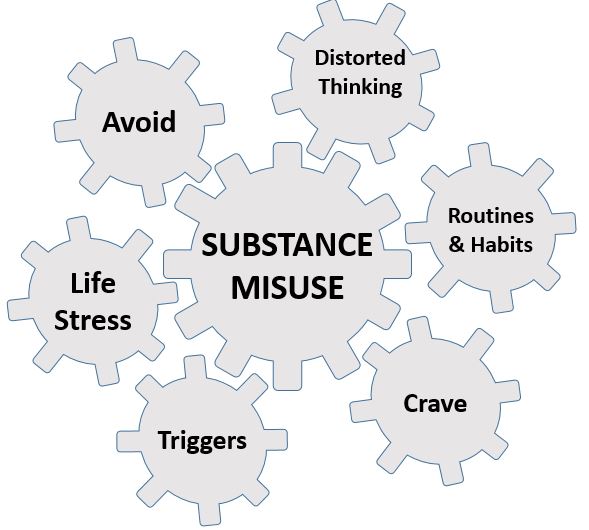
Use the cogs diagram (PDF) to help you identify what keeps you drinking/taking drugs. Put the name of the problem in the middle big cog, then write in other factors, such as: isolation, life stress, low mood, habit, low self esteem, want to be like my friends, physical addition etc.
Then you can look at each factor and try to make changes in each. You may need help for some of them - so look for the best and most appropriate person or organisation to get that help from.
Example cogs:
Doing things Differently
- Seek help - others will support you if they see you're committed to making changes. Start with (non-drinking/using) family or friends, and/or your GP. For some people though, particularly those closest to you, it might take a while before they believe you mean it this time - they may need to really see your commitment. Talk to them, explain what you hope to achieve, ask for their help and support, then follow it through with committed action.
- Use theAdvantages & Disadvantages worksheet PDF to increase your motivation to make changes
- Set goals on what you hope to achieve - You may decide to quit drinking or taking all drugs altogether, but you may have different goals for different substances. You may want to do this with someone who's able to help and support you.
- Identify your triggers and trigger situations that might make you more likely to drink or use
- Support groups - Consider and find out about local Alcoholics Anonymous (AA), Narcotics Anonymous (NA) or other similar and relevant support group - for yourself and perhaps for your family
- Find out how much your drinking, using or spending by using the Substance Use Diary PDF for one week
- Drink 6 - 8 glasses of water each day
- Start a healthy exercise plan - get advice from a suitably qualified professional
- Use medication appropriately and only as prescribed
- Avoid social situations where you're more likely to feel tempted and give in to cravings. Consider planning a new social life, based around non-substance use activity and environments.
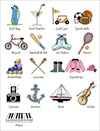
- Take up a new hobby, attend support group meetings, contact old (non-drinking/using) friends or family.
- Try out different soft drinks to use as an alternative for those places where you can't avoid being around alcohol
- Practice saying "No - I don't drink" or "No - I don't use". Click here for help with developing assertiveness skills
- Use imagery and visualisation skills to see and feel yourself being successful in various situations

- Use the Cravings Diary PDF, at least in the early days and weeks
- Use positive self talk
- Write down all the reasons you want to stay dry/clean, make copies – carry one around with you, put others in prominent places.
- Distract, Delay, Decide PDF
- Distract!
- Write a letter to someone and let them know why you’ve made this decision.
- Don't forget to congratulate yourself when you successfully overcome the cravings. You could set up a reward system so you can pamper or treat yourself, initially each successful day, then bigger treats for successful weeks etc. Ensure the treats don't involve temptation! Maybe go out on a family picnic, buy yourself a CD, rent a DVD, or get a good book from the library.
Thinking Differently
-
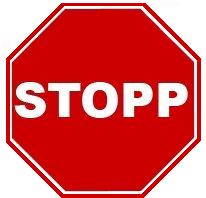
STOPP! Pause, take a breath (visualise the sign if it helps)
- Ask yourself:
-
What am I reacting to? What have I been thinking about here?
-
Am I getting things out of proportion?
-
How important is this really? How important will it be in 6 months time?

-
What would be the consequences of doing what I normally do?
-
Am I expecting something from this person or situation that is unrealistic?
-
What's the worst (and best) that could happen? What's most likely to happen?
-
Is this fact or opinion?
-
Am I using one of those unhelpful thinking habits?
-
Am I seeing things through that negative filter? Those gloomy specs? Is there another way of looking at it?
-
What's the helicopter view?
-
What advice would I give to someone else in this situation?
-
Am I spending time ruminating about the past or worrying about the future? What could I do right now that would help me feel better?
-
Am I putting more pressure on myself, setting up expectations of myself that are almost impossible? What would be more realistic?
-
Am I jumping to conclusions about what this person meant? Am I mis-reading between the lines? Is it possible that they didn't mean that?
-
What do I want or need from this person or situation? What do they want or need from me? Is there a compromise?
-
Am I just focusing on the worst possible thing that could hap
 pen? What would be more realistic?
 -
Is there another way of looking at this?
-
Am I exaggerating the good aspects of others, and putting myself down? Or am I exaggerating the negative and minimising the positives? How would someone else see it? What’s the bigger picture?
-
Things aren’t either totally white or totally black – there are shades of grey. Where is this on the spectrum?
-
This is just a reminder of the past. That was then, and this is now. Even though this memory makes me feel upset, it’s not actually happening again right now.
-
What would wise (clean) mind say about this?
-
Is there another way of dealing with this? What would be the most helpful and effective action to take? (for me, for the situation, for the other person)
-
What do I really value in life? What's really important to me? Is it my family and friends, my work, my academic career, enjoying nature, helping others, making a success of my life? What defines that? In what way? Is drinking or using drugs helping me in the service of my values? What would be more helpful? Every time you're faced with a difficult situation, or craving, ask yourself: "will this help me in the service of my values?"
Coping with cravings:
- STOPP! Pause, take a breath (visualise the sign)
- Use Mindfulness & NOW
- Breathe Mindfully
- Remind yourself that cravings only last a few minutes
- Drink a large glass of water, iced tea or vegetable juice, and pause
- When you have a slip or setback, write down what you drink or use
- Focus your attention fully on another activity - Mindful Activity
- Do something different (to what you normally do)
- Relaxation techniques - try lots and find one that works for you
- Put on some music - sing and dance along, or just listen attentively (use music that is likely to help you feel your desired emotion - avoid sad songs if you're depressed)
- Meditation or Prayer
- Help others
- Be with others - contact a friend, visit family
- Talk to someone
- Grounding techniques - look around you, what do you see, hear, smell, sense? Hold a comforting object.
- Engage in a hobby or other interest - if you don't have one, find one! What have you enjoyed in the past? What have you sometimes thought
 about doing but not got around to?
 - Write down your thoughts and feelings - get them out of your head
- Just take one step at a time - don't plan too far ahead
- Pamper yourself - do something you really enjoy, or do something relaxing
- Positive self-talk - encourage yourself, tell yourself: I can do this, I am strong and capable - find an affirmation that works for you (even if you don't believe it at first!). Write it down and memorise it for when you need it.
- Do something creative - make a box of items that remind you to use the techniques that help, or put photos on paper, or write and decorate a list
- Use Safe Place Imagery or other visualisation exercises. If you have nice memories of drinking, replace them with negative ones - when you were at your worst and felt ashamed. Use the exercises on this page to visualise a drink or drug-free positive future, seeing yourself doing the things you want to do be doing.
- Do some physical exercise - walk, jog, cycle, swim, dance & sing!
- Tell yourself: "This will pass, it's only temporary". "I've got through this before, I can do it now". (Cravings only last up to 20 minutes or so) When we're going through a tunnel and become fearful of being trapped, there's no point in stopping - we just have to carry on in order to reach the end of the tunnel. That light is there, and waiting!
- Find an alternative and healthier way of dealing with distress PDF
- If you have a setback - tell yourself it's ok, it's only once - don't dwell on it too much (other than see what triggered it so that you can then get back onto your self help plan)
Learn Mindfulness Ttechniques to cope with cravings.
The mindfulness technique of “urge surfing” (Marlatt 2002) says that we can ‘feed’ cravings by thinking about them, by trying to distract from them, by trying to avoid situations that trigger them. There is another way. Start with mindful breathing, then bring your attention to an itch. Notice those sensations and thoughts – that urge to scratch – without reacting to them.
Each time, just notice those sensations and thoughts, and bring your attention back to your breathing. Your thoughts will increase, and the urge will initially get stronger. Just keep bringing your attention back to your breath. You will notice that the urge (to scratch) crests, then subsides, then eventually goes away. Once we’ve practiced that technique, then we can use it to deal with cravings in exactly the same.
See NOW - Mindfulness For Busy People
Once you've stopped drinking or using, you can start to tackle problems:
Talk to someone about other difficulties which may include:
-
Work
-
Relationships
-
Finance
-
Housing
-
Legal
Talk to your health worker for sources of appropriate support. Your local Citizens Advice Bureau will be able to advise you directly, or give you information about other agencies who can help.
Substance Misuse Self Help - this page as PDF
Learn effective skills online - The Decider Skills for Self Help online course.
Worksheets And Diaries: PDFs
Self Help Books
BOOKS WE LOVE