MultiModal Therapy
Arnold Lazarus was a Behaviour Therapist (he coined the term), who developed what became MultiModal Therapy (MMT) as he built on the premise that we are basically biological beings who experience emotions, think, imagine, smell & touch, and relate to others as well as act, which at that time, Behaviour Therapy had limited itself to.
Lazarus lists the modalities in the acronym BASIC I.D.
B Behaviour
A Affect (emotions)
S Sensation (touch, smell, sight, hearing, taste)
I Imagery (thinking in pictures, self-image)
C Cognition (thinking in words, beliefs, attitudes, opinions, thinking styles)
I Interpersonal (how we relate to others)
D Drugs & biology (medications, substances, diet, exercise, general health, sleep)
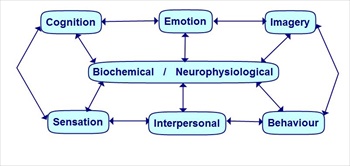
MMT has therefore developed into a therapy that incorporates all elements of our personality, rather than restricting therapy to one or two dimensions. A MultiModal Life History Inventory, which is usually offered to clients to complete at home following the initial consultation, helps the therapist and client to identify those modalities (dimensions) that the client prioritises and/or is neglecting.
Therapy can therefore commence with the most appropriate modality which is likely to most benefit that client. Therapy will include interventions in all modalities, and the interventions may include effective techniques from other psycho-therapeutic approaches.
From this multimodal assessment, a treatment plan is devised and will include interventions in each modality. See this example for someone who is depressed:
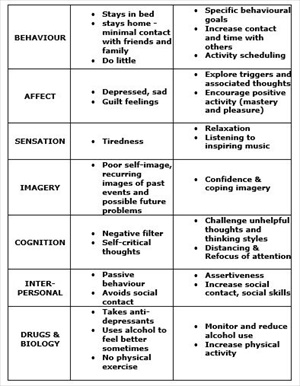
MultiModal Treatment Plan
MMT is adapted to each client. Three depressed clients might receive three very different courses of therapy, as a result of identifying and tuning into the client's preferred modality ("bridging") and then identifying and prioritising the client's firing order of the modalities ("tracking").
In addition, at the initial interview, each client is asked what they want from their therapist and how they want their therapist to act - perhaps reflective or more directive, although Lazarus cautions about wasting time and advocates that MMT is a brief but comprehensive psychotherapy (external link).
MultiModal Self Help (use with the MMT Treatment Plan) - with categorised self help links
MultiModal Treatment Plan
Validation: From an email I received from Dr Arnold A. Lazarus on 8.3.2011: "(this page) is an excellent summary of the approach, well written and clinically accurate."
He gave permission for the below linked MMT resources to be added to this site.
Expanded Structural Profile PDF
Multimodal formulation PDF
Dr Lazarus sadly died on 10.1.2013
Related Links
Brief But Comprehensive Psychotherapy
The Practice Of Multimodal Therapy
BOOKS WE LOVE