Interpersonal Effectiveness - part 2

We have found that it is useful to notice what we're thinking, what body reactions we have, our emotions and the way we react behaviourally at times when we are feeling upset.
When communicating with other people, it helps to keep in mind not only what you are experiencing (thoughts, feelings, behaviours) but also what they might be experiencing, which might be similar, different, or completely opposite to your experience (and anywhere in-between!).
Just because you believe they are thinking something - maybe about you - that doesn't necessarily make it true - our minds are continually trying to make sense of our world, but our minds do not always get it right.
Our thoughts and emotions can get in the way of effective communication, and we can end up making things worse and messing things up.
This awareness of our own reactions, together with an understanding and awareness of how the other person might be reacting (their thoughts, feelings and responses) will give us important knowledge and help us to respond in a more helpful and effective way.
It is so easy to get things wrong and misunderstand what the other person is saying. W tend to react to what we think they mean, they react to what they think we mean, and so it goes on.
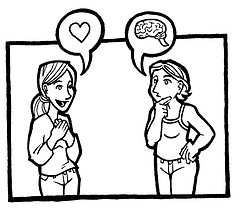
We can learn to be more assertive and effective in communicating what we really want to say, without upsetting the other person, and reduce misunderstandings on both sides.
The aim is to practice behaving and communicating more assertively, and to reduce acting and communicating in passive and aggressive ways, which usually result in distress.
It can help to think about a person who you respect and who you believe acts and communicates effectively and assertively, respecting others and themselves, who is warm and friendly. This can be a person who is known personally to you, or a famous person, or perhaps a fictional character.
You can model yourself on that person - imagine them dealing with particular situations and how they would do it, what that would look like. Then imagine yourself acting in a similar way. Then do it.
Practice it often. Initially, it doesn't matter if you don't feel like being assertive, just practice it anyway. When you notice yourself acting aggressively or passively, just notice, then change your posture, expression and behaviour to as though you were being assertive. It works!
Go to the next page to learn more about being assertive.
- Assertiveness PDF (Interpersonal Effectiveness)
- DBT Dialectical Behaviour Therapy
- MP3 guided imagery and relaxation downloads
- The Decider - a pictorial prompt sheet and manual to help us choose the best coping skill
- Relaxation
- Self-Help Course Step 1
- Mindful Breathing
- Colour Breathing
- Anxiety self-help
- Depression self-help
- Anger self-help
- Multimodal Self-Help & Treatment Plan
- STOPP
- Defusing Exercises
- Different Perspectives
- The Helicopter View
- Imagery Self-Help
- NOW
- Meditation
- Accept, Change or Let go?
- ACE Activity
- Distress Tolerance
- Emotion Regulation
- Interpersonal Effectiveness
See also: The Decider Skills for Self Help online course
More information:

Self Help Books
How to be Assertive In Any Situation
When I Say No, I Feel Guilty: How to Cope, Using the Skills of Systematic Assertive Therapy
Brilliant Assertiveness: What the Most Assertive People Know, Do and Say (Brilliant Lifeskills)
Assertiveness: How to Stand Up for Yourself and Still Win the Respect of Others





BOOKS WE LOVE