Emotion Regulation
DBT uses Emotion Regulation skills to help us change our emotions or situations. But sometimes it's not appropriate or we're not able to change the situation or our emotions, then we should use Distress Tolerance skills.
Emotions are normal and everyone experiences them. Sometimes, particularly when we have had persistent distressing experiences during our lives, we can emotionally react more often to situations (that others may not find distressing) where we feel threatened. The distress can be very intense and it's difficult to manage ourselves and situations when things are feeling so over-whelming.
Learning Emotion Regulation skills will help us learn to effectively manage and change the way we feel and cope with situations.
Emotions, thoughts and what we do or feel an urge to do (behaviours) are all linked and become vicious cycles. Changing one part of the cycle will help improve the situation and help you feel better.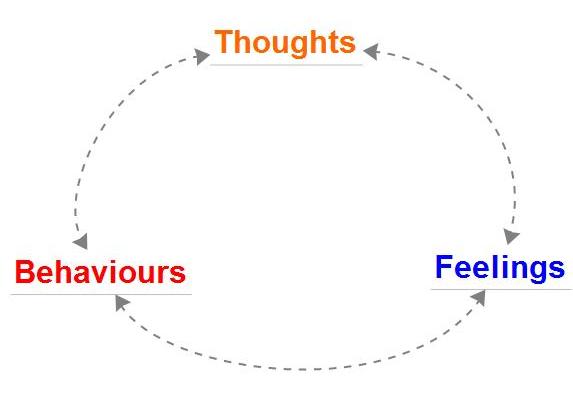
When we experience really strong negative emotions, it’s easy to get caught up into the old pattern of using unhelpful and damaging coping strategies such as using substances, self-harming or unhealthy eating habits.
Emotions are closely linked to our bodies, and each emotion has a particular behaviour linked to it. The word "emotion" can be described as E - MOTION (Elicit Motion).
Find out more about how we can recognise different emotions - their thoughts, feelings and typical behaviours:
Emotion causes us to react and move in certain ways. Each emotion has an "Action Urge" - the automatic urge we feel. We can use Opposite Action skill to help us make a more helpful and positive response and outcome. Examples of emotions and their action urges and opposite action: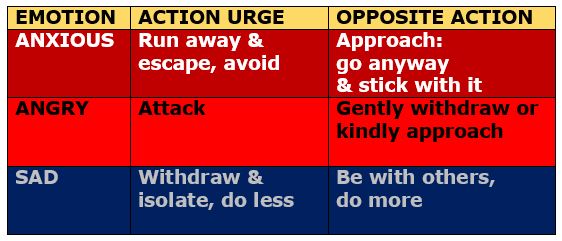
The acronym PLEASE Master can remind us what we can do regularly in order to keep ourselves healthy and stable. It is about looking after our physical health which which enable us to better cope with mental distress.
PL treat Physical iLness
E Eat healthily
A Avoid mood-altering substances
(alcohol or drugs)
S Sleep well
E Exercise
Master plan and do something every day that gives you a sense of achievement or ability.
Increase positive emotions
Do more enjoyable activities – every day (see the list of distractions for ideas). Do more enjoyable activities than you would normally do, schedule them in each day.
DO at least ONE THING each day
Distract Lots of ideas!
Be Mindful of positive experiences
Focus your attention on positive events as they happen
Energising vs Draining Activity
Notice when your mind wanders to unhelpful thoughts, and bring your focus back to the current situation. NOW
Changing the way we think
As thoughts play such an important role in our distressing emotions, it can be very effective to notice these thoughts, and learn to think differently, or to think about thoughts in a different way.
STOPP! Pause, take a breath, don't react automatically
Ask yourself:
-
What am I REALLY reacting to?
-
What is it that is really pushing my buttons here?
-
What is it that I think is going to happen?
-
What is the worst (and best) that could happen? What is most likely to happen?
-
Am I getting things out of proportion?
-
How important is this really? How important will it be in 6 months time?
-
What harm has actually been done?
-
Am I expecting something from this person or situation that is unrealistic?
-
Am I overestimating the danger?
-
Am I underestimating my ability to cope?
-
Am I using that negative filter? Those gloomy specs? Is there another way of looking at it?
-
What advice would I give to someone else in this situation?
-
Am I spending time ruminating about the past or worrying about the future? What could I do right now that would help me feel better?
-
What advice would I give someone else in this situation?
-
How would someone else see this situation? What’s the bigger picture?
-
What would be the consequences of responding the way I usually do?
-
Is there another way of dealing with this? What would be the most helpful and effective action to take? (for me, for the situation, for the other person)
If your distressing emotions are caused by an upsetting image or picture which keeps coming into your head, you can practice manipulating the image to reduce the distress.
Image Manipulation
Sometimes we can get horribly distressing intrusive images that just pop into our heads, and we have trouble getting rid of them again. The image may be based on a real memory, or just some random terrible image. These images can trigger strong physical sensations, and intense emotions of fear, dread, anger or sadness.
We can learn to manipulate the image so that we reduce the distressing feelings:
Imagine putting the image on a TV screen. Now with an imaginary remote control, make the image smaller, making it more distant, perhaps turn it into black and white, remove the sound or give it a different soundtrack.
Imagine a plate or sheet of strong clear plastic and put it between your face and the image. Push that image away from your face, until it gets smaller and is further away.
- DBT Dialectical Behaviour Therapy
- MP3 guided imagery and relaxation downloads
- The Decider - an pictorial prompt sheet and manual to help us choose the best coping skill
- ACE Activities
- NOW
- STOPP!
- Mindful Breathing
- Colour breathing
- Relaxation
- Self-Help Course Step 1
- Anxiety self-help
- Depression self-help
- Anger self-help
- Multimodal Self-Help & Treatment Plan
- Defusing Exercises
- Different Perspectives
- The Helicopter View
- Imagery Self-Help
- Meditation
- Accept, Change or Let go?
- Distress Tolerance
- Interpersonal Effectiveness
More information:

Books
DBT® Skills Training Handouts and Worksheets

The Dialectical Behavior Therapy Skills Workbook: Practical DBT Exercises for Learning Mindfulness, Interpersonal Effectiveness, Emotion Regulation ... Tolerance
DBT® Skills Training Manual

DBT Made Simple: A Step-by-Step Guide to Dialectical Behaviour Therapy
The Expanded Dialectical Behavior Therapy Skills Training Manual: Practical DBT for Self-Help, and Individual & Group Treatment Settings

BOOKS WE LOVE