Stress Self Help
Self help guide for Stress, using effective CBT strategies. Make sense of your stress, then learn how to make positive changes
Learn effective skills online - The Decider Skills for Self Help online course.
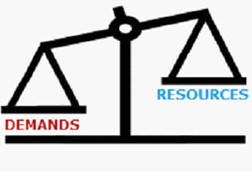
Stress is our psychological, emotional and physical response to pressure. We feel there are too many demands, and too few resources to cope.
That pressure can arise from external factors including life events, illness (ourselves or someone close to us), living conditions, work, home and family, study, lack of some necessity, or the demands we place on ourselves.
Even those events which we see as enjoyable can be stressful, such as holidays, moving home, starting a better job, pregnancy, parenthood, Christmas etc.
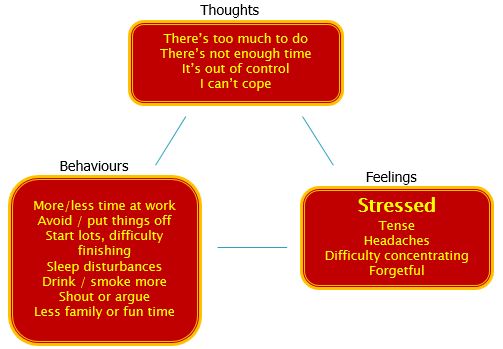
Thoughts which are common when feeling stressed
- This is too much - I can't cope!
- It's not fair. Someone should be helping me.
- There is too much to do, and too little time
- I'll never finish
- I have to get this done
Emotions
Physical sensations
The physical response to stress is caused by the body's adrenaline response - the body's alarm signal and survival mechanism when faced with a threat.
- Heart racing, pounding
- Breathing faster
- Tense muscles - e.g. neck, shoulders, abdomen
- Hot, sweaty
- Headache
- Difficulty concentrating
- Forgetful
- Agitated, restless
- Bladder or bowel problems
Behaviour
- Unable to settle, constantly busy, rushing about
- Lots of things on the go, but don't finish them
- Sleep disturbances
- Shouting, arguing
- Eating more (or less)
- Drinking more
- Using drugs
- Smoking more
- Crying
Vicious Cycle Of Stress
Making Positive Changes
Identify your stressors
- What's making you stressed?
- Where am I when I'm feeling stressed? What am I doing? Who am I with?
- What helpful changes could I make?
- What is within my control?
Even if there is little you can do about some situations, maybe making some small changes - in routine, in the way you handle things, doing things differently, taking time out, thinking about it in a different way, in getting help, seeking advice - could make all the difference
Identify the factors that help keep the problem going
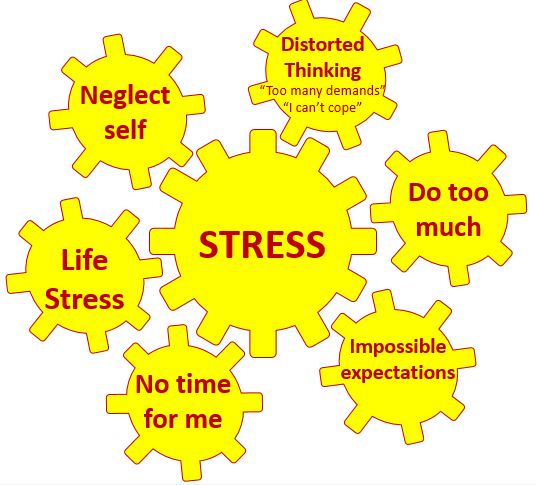
Use the cogs diagram (PDF) to help you identify what contributes to your stress. Look at each factor and try to make changes in each.
Example vicious cogs of stress:
Doing Things Differently
Do something different (to what you normally do).
Consider what demands you can reduce, or ask others to help with.
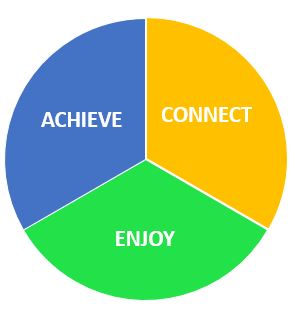
Make time for yourself each day - relaxation, fun, enjoyment. Create a healthy balance - allow time for activities which give you a sense of achievement, those that help us connect and give a sense of closeness to others, and of a sense of enjoyment.
When stressed, we often spend more time doing things that help us achieve, but less of enjoyment and closeness to others. Aim for a healthy balance as shown in the pie chart, between ACE activites: Achievement, Closeness or connecting to others, and Enjoyment (ACE).
- Keep an ACE Log PDF to help you keep track
- BACES: Steps to positive mental health
- Mindfulness - learn Mindful Breathing
- Focus your attention fully on another activity - Mindful Activity
- Relaxation techniques - try lots and find one that works for you
- Put on some music - sing and dance along, or just listen attentively (use music that is likely to help you feel your desired emotion - avoid sad songs if you're depressed)
- Meditation or Prayer
- Help others
- Be with others - contact a friend, visit family
- Talk to someone
- Grounding techniques - look around you, what do you see, hear, smell, sense? Hold a comforting object.
- Physical exercise - walk, swim, go to the gym, cycle (take the stairs instead of the lift, get off the bus a stop early)
- Nature as Therapy
- Engage in a hobby or other interest - if you don't have one, find one! What have you enjoyed in the past? What have you sometimes thought about doing but not got around to?
- Limit your responsibilities - it's okay to say no
- Write down your thoughts and feelings - get them out of your head
- Just take one step at a time - don't plan too far ahead
- Positive self-talk - encourage yourself, tell yourself: I can do this, I am strong and capable - find an affirmation that works for you (even if you don't believe it at first!). Write it down and memorise it for when you need it.
- Do something creative - make a box of items that remind you to use the techniques that help, or put photos on paper, or write and decorate a list
- Use Imagery e.g. to relax and bring about future goals
- Tell yourself: "This will pass, it's only temporary". "I've got through this before, I can do it now". When we're going through a tunnel and become fearful of being trapped, there's no point in stopping - we just have to carry on in order to reach the end of the tunnel.
- Learn to communicate assertively (rather than passively or aggressively)
- Eat a healthy balanced diet, with plenty of fruit and vegetables
- Drink less caffeine and more water
- Pamper yourself - do something you really enjoy, or do something relaxing
- Watch relaxing videos
- Download and listen to relaxing mp3s
Thinking Differently
STOPP! Pause, take a breath, don't react automatically
Ask yourself:
- What am I reacting to?
- What is it that I think is going to happen here?
- Is this fact or opinion?
- What's the worst (and best) that could happen? What's most likely to happen?
- How helpful is it for me to think this way?
- Am I getting things out of proportion?
- Is it worth it?
- How important is this really? How important will it be in 6 months time?
- What meaning am I giving this situation?
- Am I overestimating the threat?
- Am I underestimating my ability to cope?
- What's the bigger picture? The helicopter view?
- Have I got my stress-head on?
- What do I look like to other people? How am I affecting them?
- Am I mind-reading what others might be thinking?
- Am I believing I can predict the future?
- Is there another way of looking at this?
- What advice would I give someone else in this situation?
- Am I putting more pressure on myself?
- Just because I feel bad, doesn't mean things really are bad.
- Can I do things any differently here?
- How much can I control in this situation? What is outside of my control?
- What changes (however small) can I make to those things that I am able to control?
- What do I want or need from this person or situation? What do they want or need from me? Is there a compromise?
- What would be the consequences of responding the way I usually do?
- Is there another way of dealing with this?
- What would be the most helpful and effective action to take? (for me, for the situation, for the other person)
Stress Self Help: download or print this page (PDF)
BACES: Steps to positive mental health
Self Help for Stress - video
Self Help Books
Overcoming Stress
An Introduction to Coping with Stress
Mindfulness for Health: A practical guide to relieving pain, reducing stress and restoring wellbeing
Full Catastrophe Living, Revised Edition: How to cope with stress, pain and illness using mindfulness meditation
Mindfulness: A practical guide to finding peace in a frantic world


Learn effective skills online - The Decider Skills for Self Help online course.
Books
Overcoming Stress
An Introduction to Coping with Stress
Mindfulness for Health: A practical guide to relieving pain, reducing stress and restoring wellbeing
Full Catastrophe Living, Revised Edition: How to cope with stress, pain and illness using mindfulness meditation
Mindfulness: A practical guide to finding peace in a frantic world
Useful links
Stress Self Help: download or print this page (PDF)
BOOKS WE LOVE